TALAYOTS
We cannot stress enough that the municipality of Porreres is home to an exceptionally rich archaeological heritage, although the state of conservation and maintenance of this heritage has not always been ideal. Its significance is clearly reflected in the four archaeological inventories published to date in Mallorca, which currently record forty-nine inventoried archaeological sites in Porreres spanning different periods and typologies.
ES POU CELAT
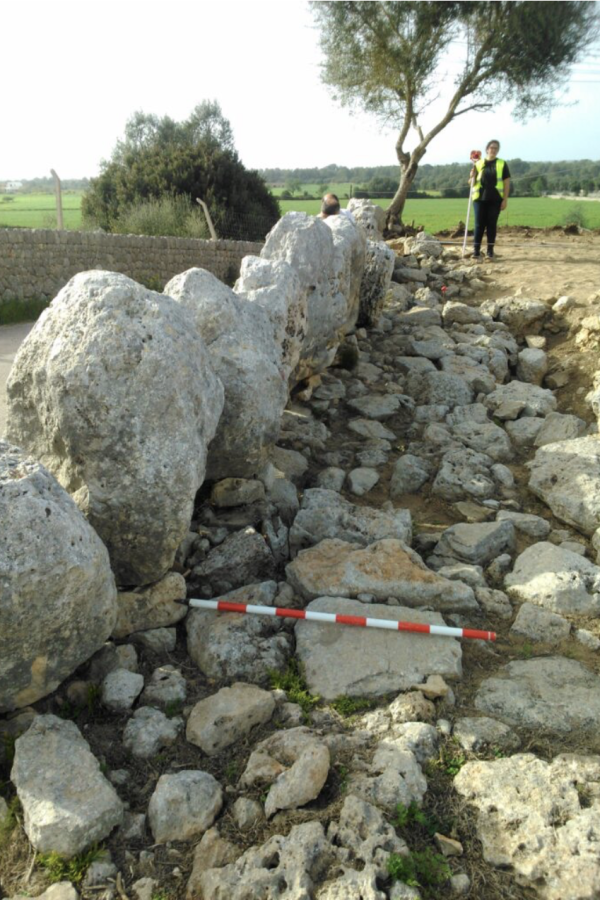
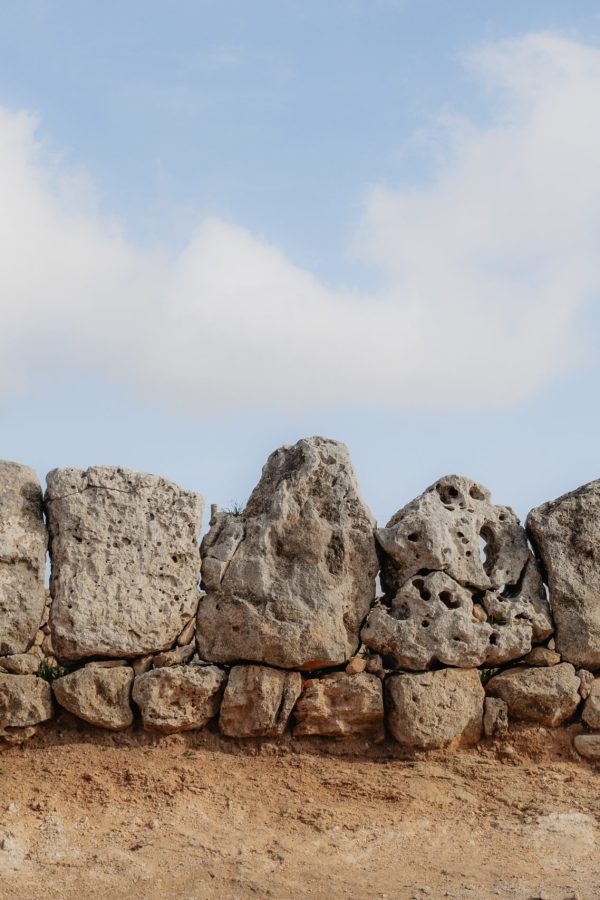
The archaeological site of Pou Celat, located beside the Camí de Son Mesquida, reveals the impressive remains of a prehistoric settlement, most notably its 37-metre cyclopean wall, built from large vertical stone blocks and consolidated in the 1980s by Gabriel Pons. Inside the enclosure, two main areas are preserved: a quadrangular room adjoining the wall, which may have served as a storage space or workshop, and a porticoed area in the south-eastern section. Archaeological evidence indicates that the wall was built around 600–550 BC, while ceramic remains show that the site was occupied from the end of the post-Talayotic period through to the 1st century AD, with a possible reoccupation from the 4th century AD onwards, when late and kitchen ceramic remains are recorded. With its combination of fortification and living spaces, Pou Celat stands as a valuable testament to the continuity and transformation of settlements in Mallorca across the centuries.
ES BAULENES
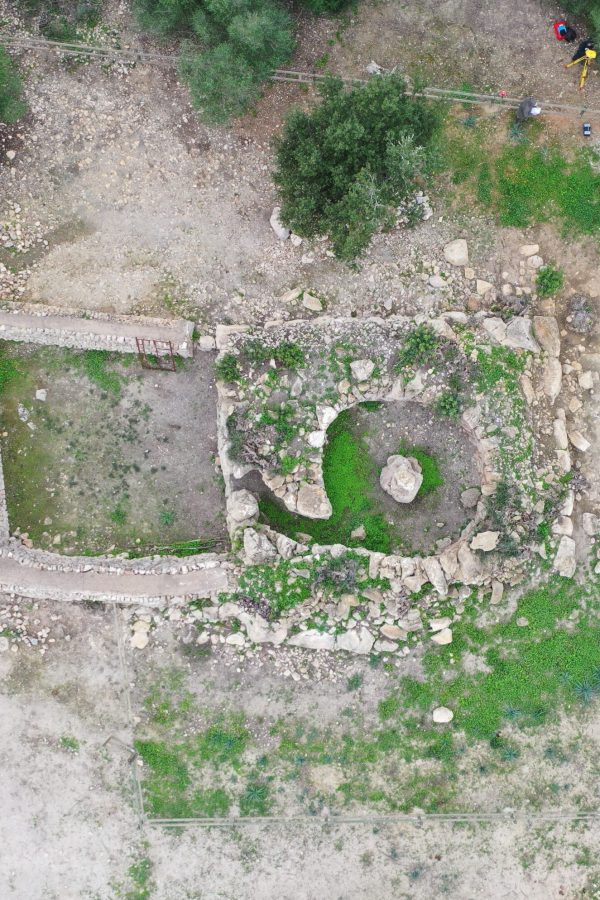
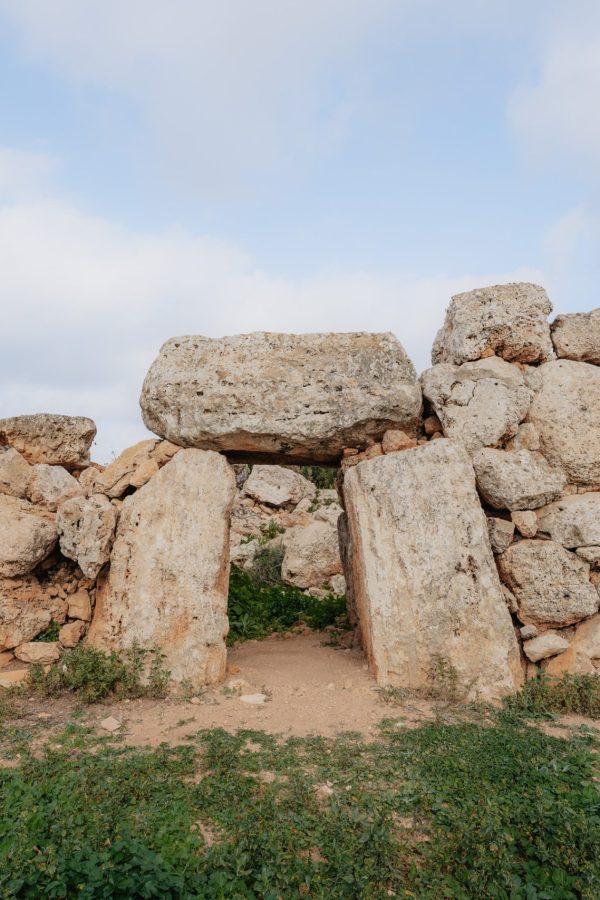
The site is located on the southern slope of the municipality, near the farmhouses of Es Baulenes and the Camí de Baulenes, and includes a circular talayot and the Talayotic burial cave of Es Baulenes, possibly related to the talayot of Son Verdereta. The talayot, measuring 12 metres in diameter and 2.60 metres in height, is built with cyclopean masonry on a natural platform. The south-facing portal (108°) is fully preserved, formed by three monoliths that give access to the interior chamber, 6 metres in diameter, with a central pillar still visible. The ceramics found on site indicate prolonged occupation: post-Talayotic, Roman (Late Imperial), late antique and Islamic, prior to the arrival of the Christian presence — a pattern common to many archaeological sites in Porreres.
ES PAGOS
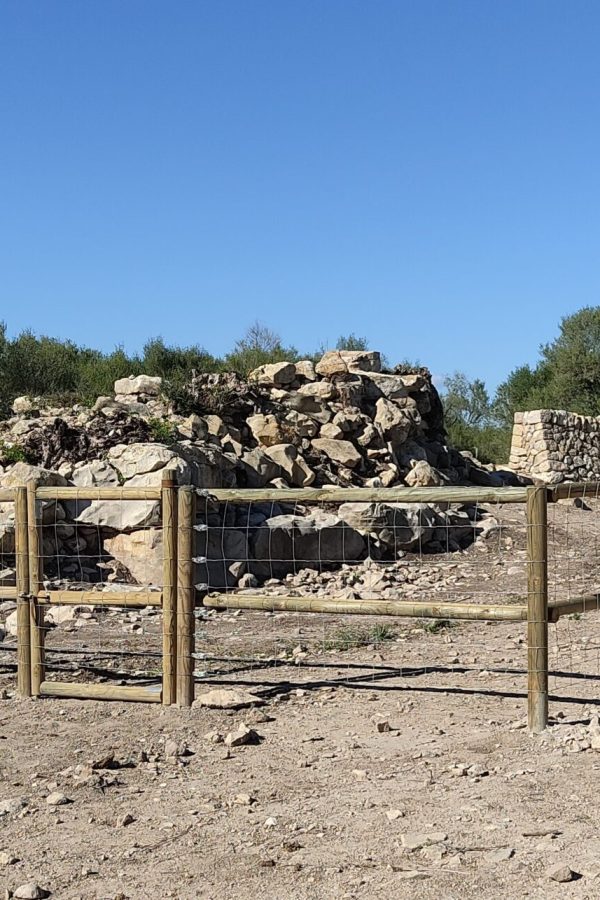
This site is located on the northern boundary of the municipality of Porreres, bordering the municipalities of Vilafranca de Bonany and Sant Joan. It stands on the summit of a hill, surrounded by scrubland and next to a field within the estate of the possessió of Es Pagos, from which it takes its name. The Talayot des Pagos is a tower-like structure with a square floor plan (13 m wide and 2.40 m high), featuring an ellipsoidal chamber 6 metres in diameter with a central column. It is in poor condition due to natural deterioration and the removal of stones for other uses over the years. It displays distinctive features, including a zigzag entrance with an azimuthal orientation of 205° — an unusual characteristic. Between 2019 and 2022, accumulated stones that had reduced the talayot to a pile of rubble were removed, and an adjoining space has been set up as an interpretation centre. It is the only visible structure of what was probably a Talayotic settlement, with evidence of occupation extending into the post-Talayotic, Roman and Islamic periods, documented through abundant indigenous, Punic-Ebusitan and Roman ceramics, indicative of a possible rural settlement (pagus, villae or vicus). Several related archaeological sites surround the talayot, including Iron Age necropoles, settlements and burial caves, though many show no visible structures and are evidenced primarily by ceramic remains.